The Mission
Create a sustainable product system in the greater Syracuse area that benefits the community and environment.
Background | Audience | Direction
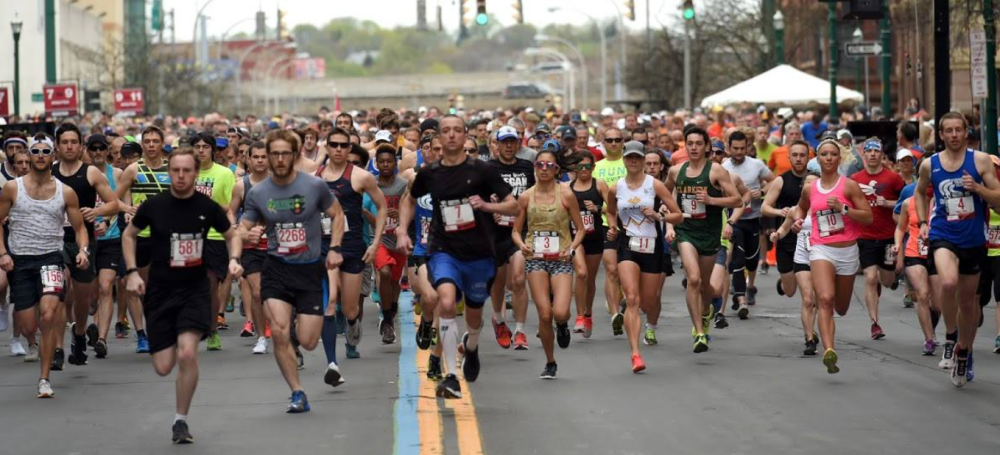
Community events play a large role in Syracuse’s identity. From minor league baseball games to local races, these gatherings bring people together, strengthen local pride, and support the city’s economy. In particular, sporting events such as Syracuse Mets’ games and the Mountain Goat Race attract thousands of residents, students, and visitors each year.
For decades, Syracuse has been a location known for its industrialization. Throughout the late 19th and early 20th centuries, many companies manufactured in Syracuse with no regard for the local ecology. As a result, Lake Onondaga had become one of the most polluted waterways in the United States.
Honeywell, the company that now occupies this land, has invested in using willow trees to revitalize the soil and protect the lake. These willow trees are harvested annually and are used as fuel via furnace.
Mountain Goat Race
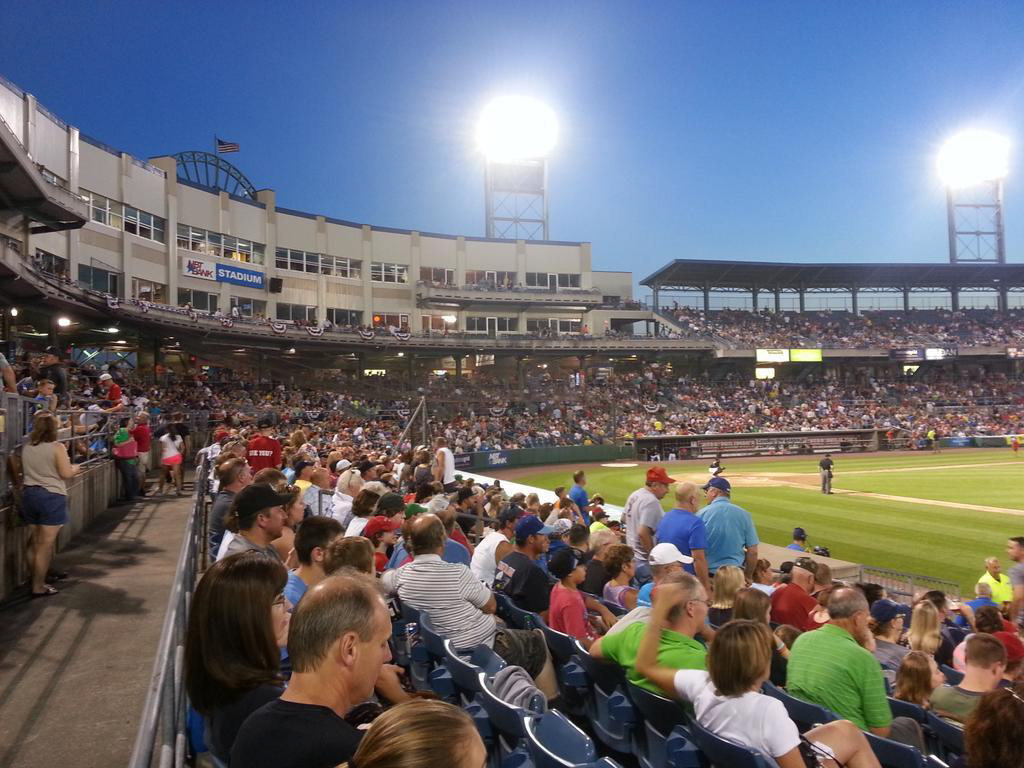
Syracuse Mets
Current System | Community Events and Waste
Although these events are key to the local community, they often rely on disposable packaging at a large scale, producing a huge amount of waste. At events such as Syracuse Mets games or the Mountain Goat Run, event waste is especially challenging due to the volume of waste that’s being disposed of in a short period of time. These two sporting events are significant because of their associations with food; for example, for many people, going to a baseball game would not be the same without a hot dog, and after running a race, large amounts of food are almost always given out to runners looking to refuel.
Calculating Waste
If the stadium where the Syracuse Mets play (NBT Bank Stadium) has a capacity for about 11,000 fans, and each fan produces between 1-2 pounds of trash, then roughly 16,500 pounds of trash would be produced each game. In the Syracuse Mets’ 2025 season, they played 75 home games, so we can estimate that, at full capacity, about 1.24 million pounds of waste were produced during their season just at NBT Bank Stadium.
If 1,500-3,000 people participate in the Mountain Goat Race, and they each produce 1-2 pounds of trash, that means that roughly 3,375 pounds of trash would be produced at the event alone.
Where Does it Come From?
Most plastics are made from natural gas liquids, which are extracted through fracking in the US. These oils are then sent to international manufacturers. Currently, China is leading as the world’s largest plastics producer, and most plastic food containers come from China, Mexico, and Vietnam.
We can infer that plastic food containers that would be used at events like a Syracuse Mets game or the Mountain Goat run would be manufactured in China. From here, they would likely be shipped in an ocean freight container, be transferred to a truck, and distributed to businesses.
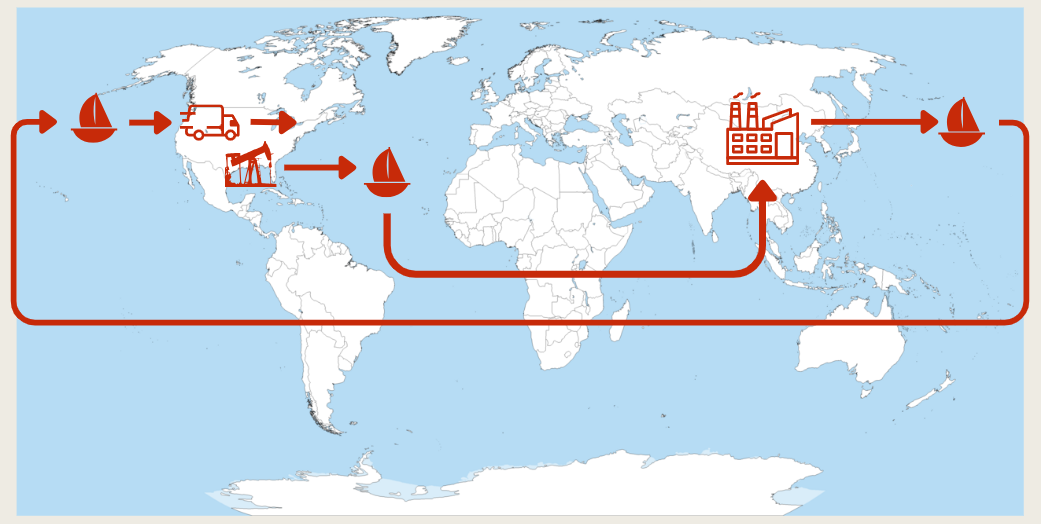
Current Product Map
Design Opportunity
How might we reimagine high-volume packaging to be more sustainable in our local community, using material sourced from the Lake Onondaga revitalization farm?
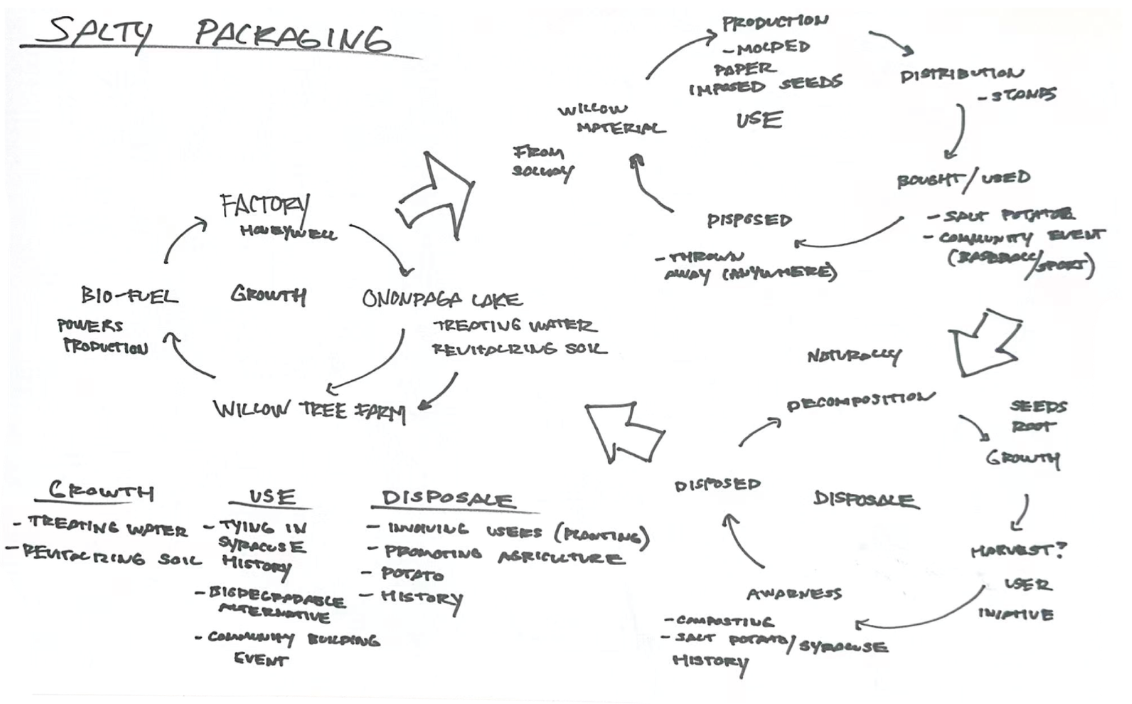
Initial Planning
New System
-An annual event dedicated to promoting eco-consciousness and environmental awareness.
-Seed Shell would be adopted by all food vendors at participating events, ensuring a consistent and sustainable packaging system. The receptacles would remain unchanged, while the packaging naturally decomposes in a landfill, reducing environmental impact.
-Each vendor will display signage and promotional materials, including plaques with QR codes linking to sustainability information.
-At events such as the Mountain Goat Race, the packaging would be used across all participating food trucks and food vendors sponsoring the event.
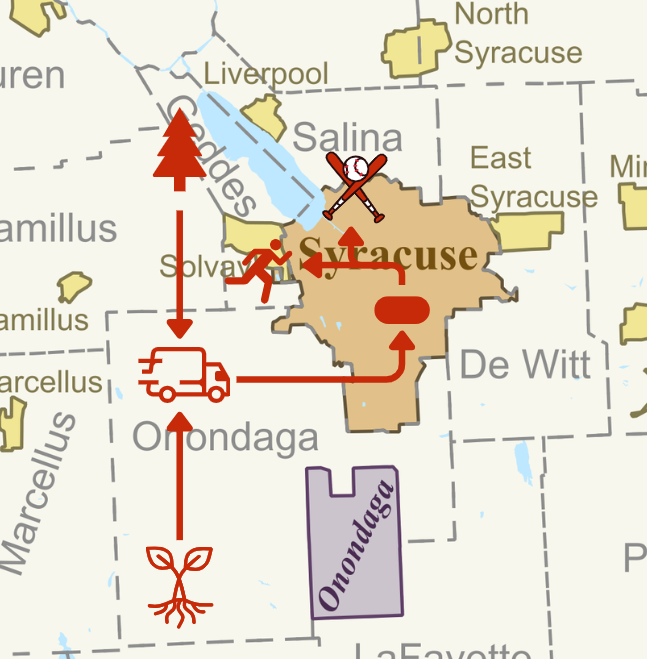
The entire product system exists within a 13 mile radius
Where Would it Come From | Onondaga Lake Restoration
Everything from the Seed Shell system would be locally sourced. Willow trees are harvested at the Honeywell Solvay waste site, where they are grown as a geothermal membrane to remove moisture from the ground, preventing chemicals from leaching into Onondaga Lake.
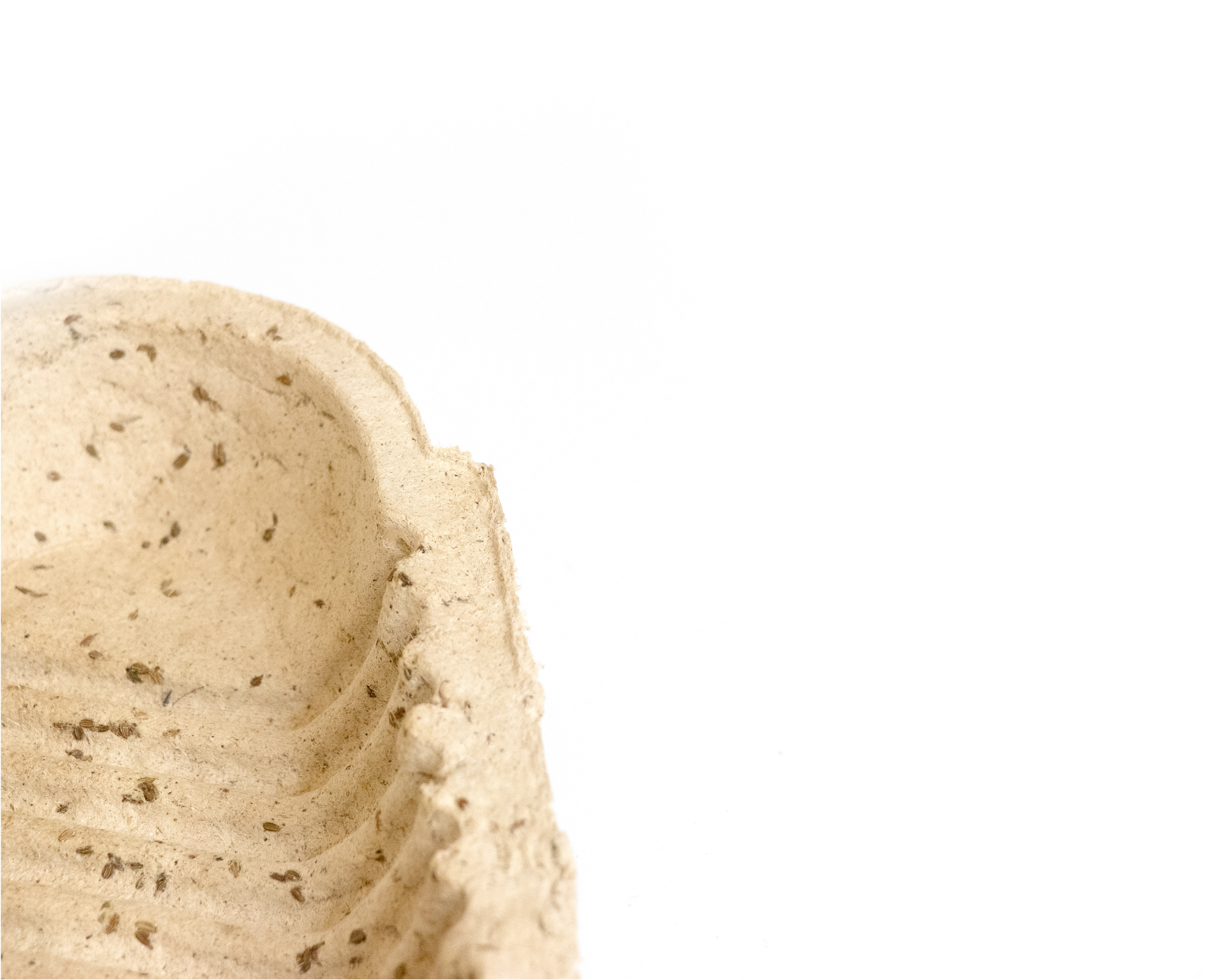
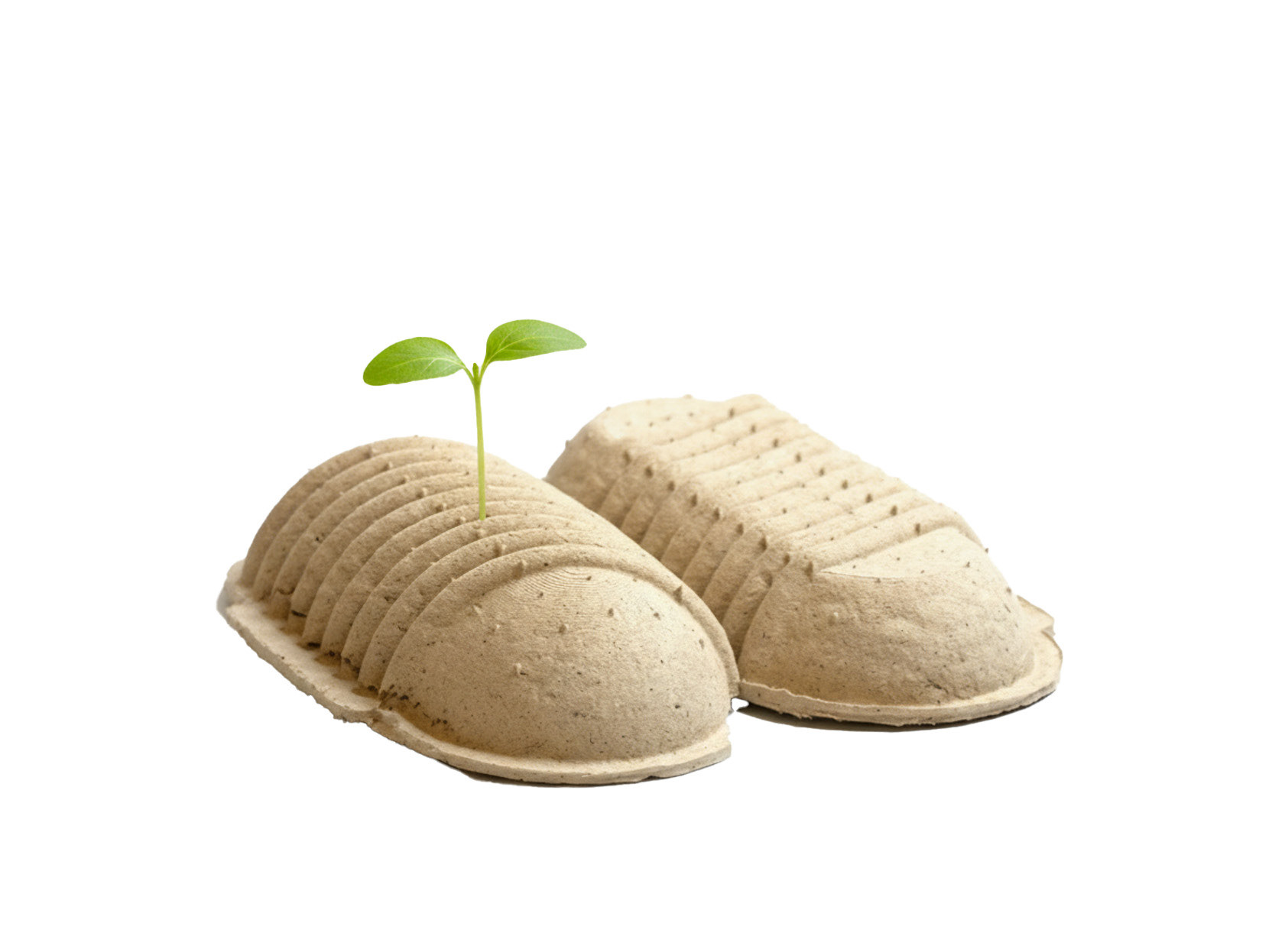
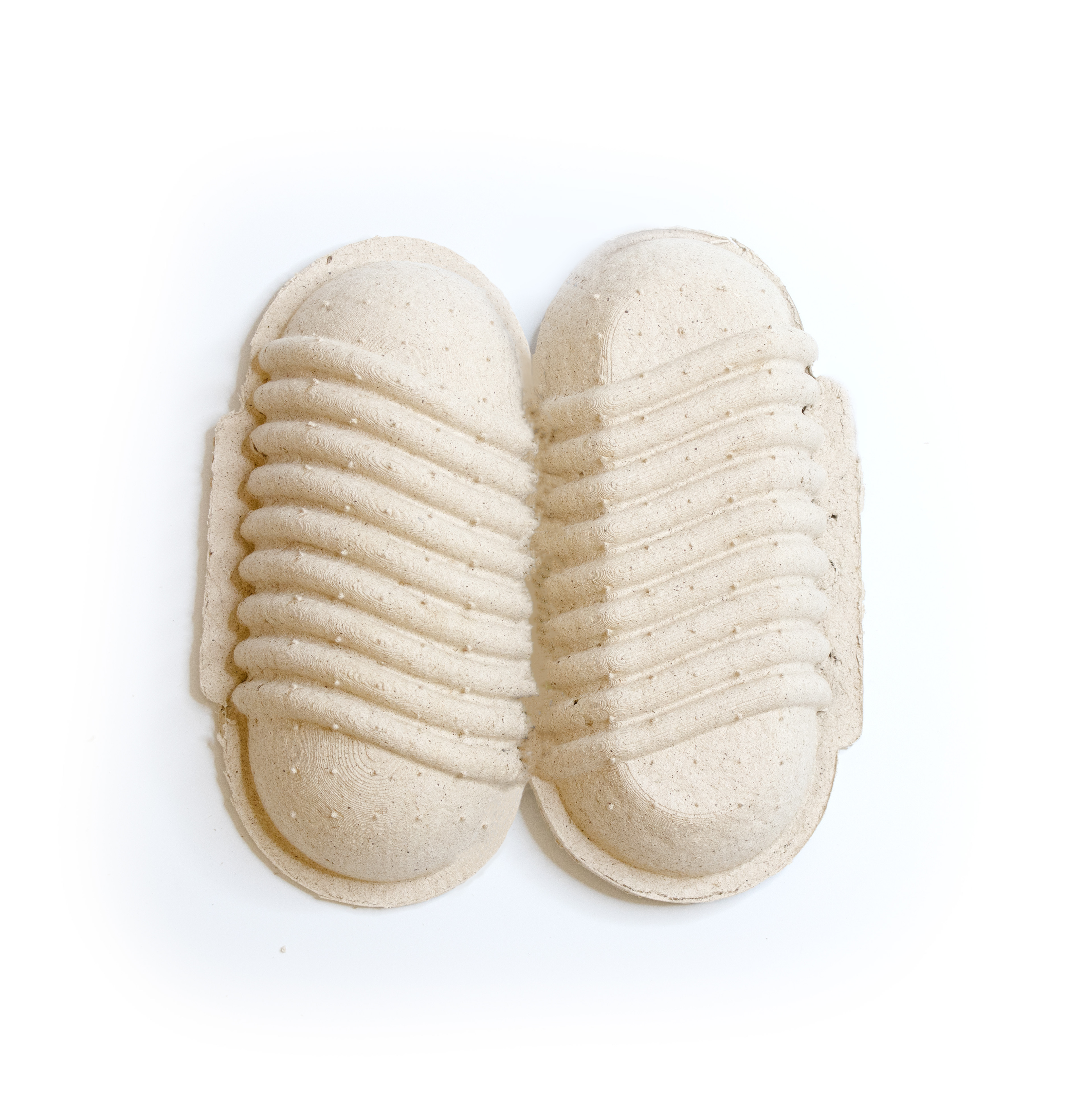
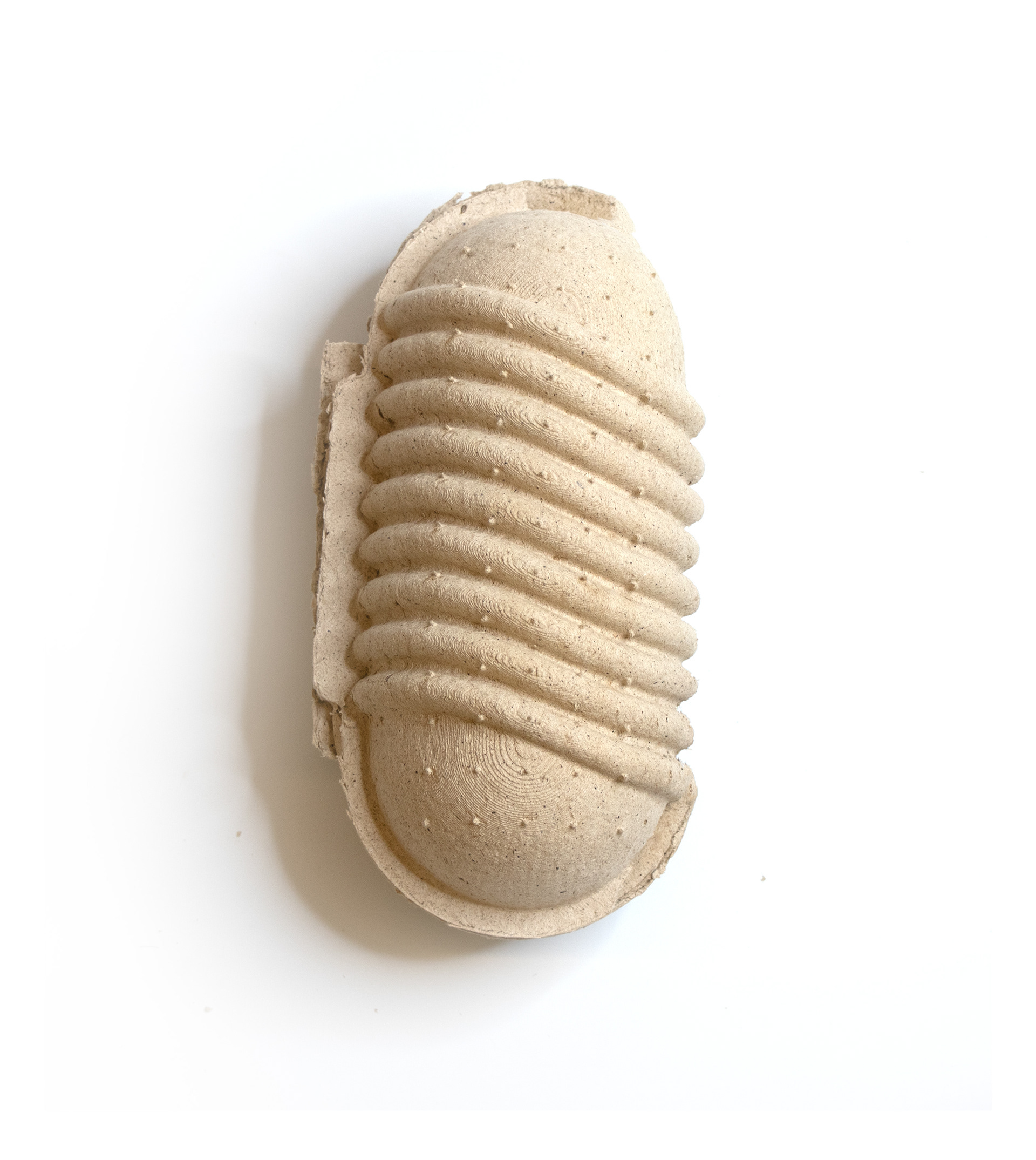
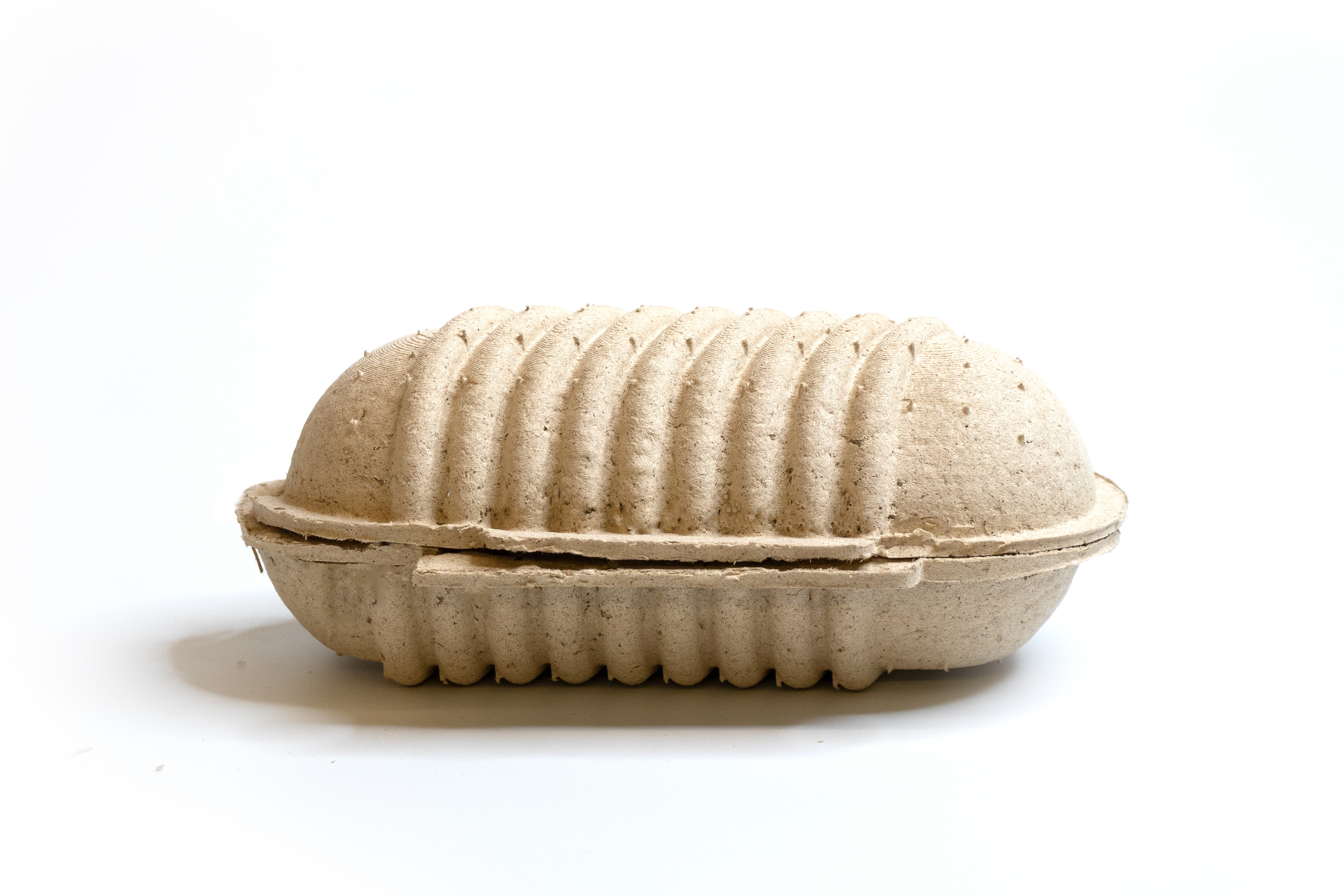
This willow is chipped, pulped, and molded into packaging. In addition, seeds are imposed into the packaging. From here, the packaging is distributed to events at NBT Bank Stadium and the Mountain Goat Run, along with a group planting event. Group participation results in a Cradle to Cradle system where Seed Shell returns directly into the environment, helping grow new material and biodiversity.
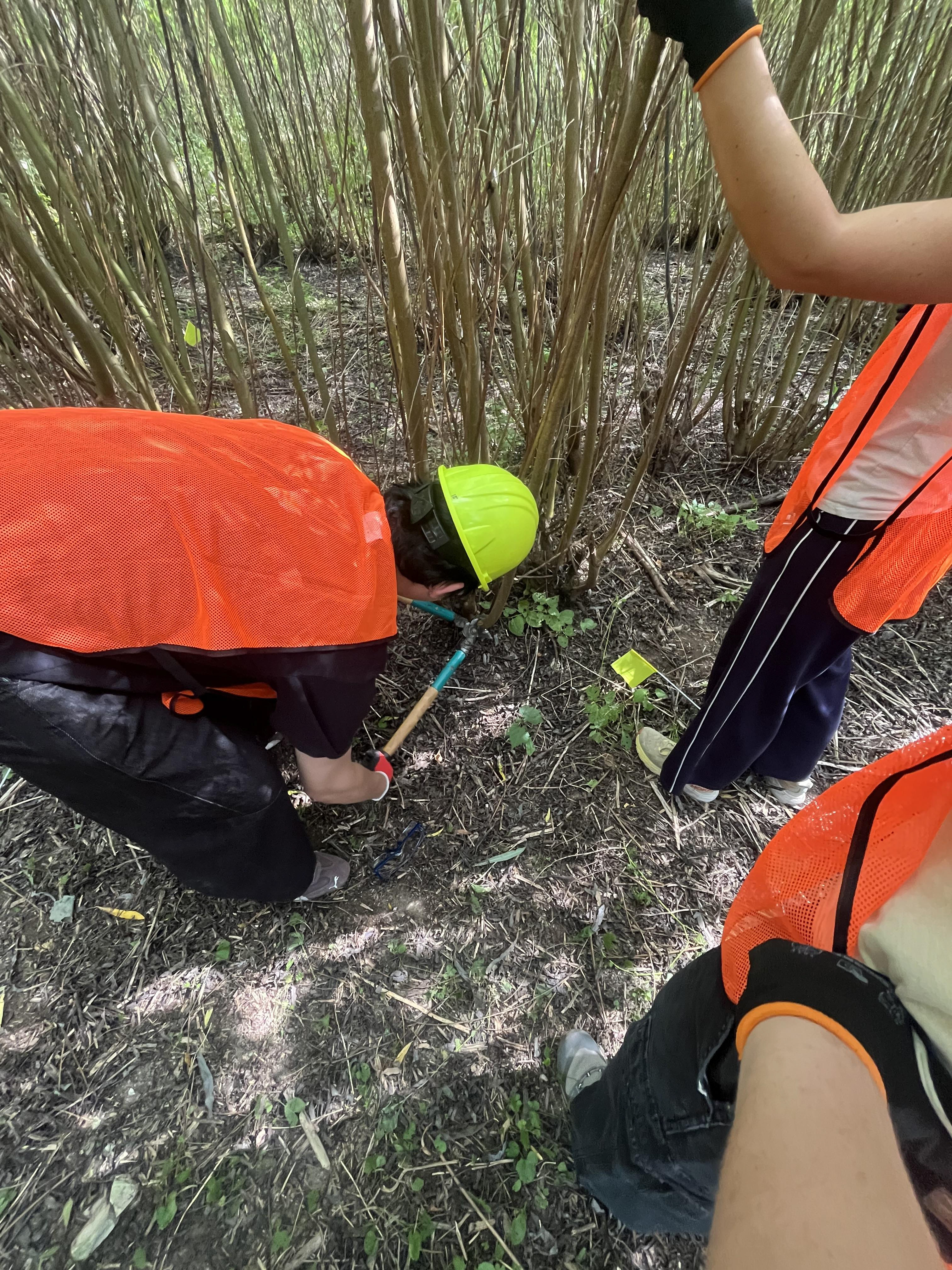
Lake Onondaga Restoration Site - Willow Tree Farm
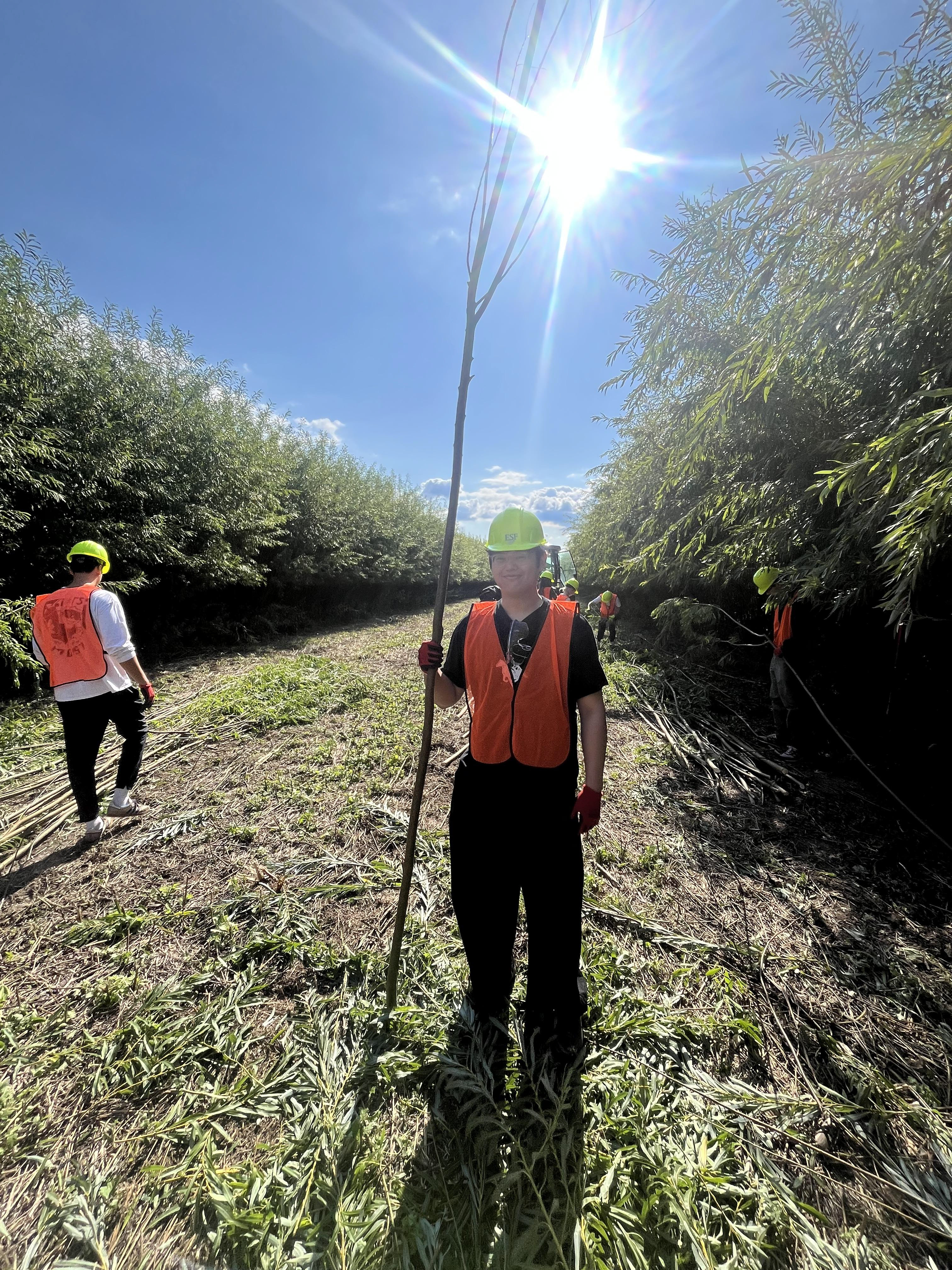
Model and Sample Creation
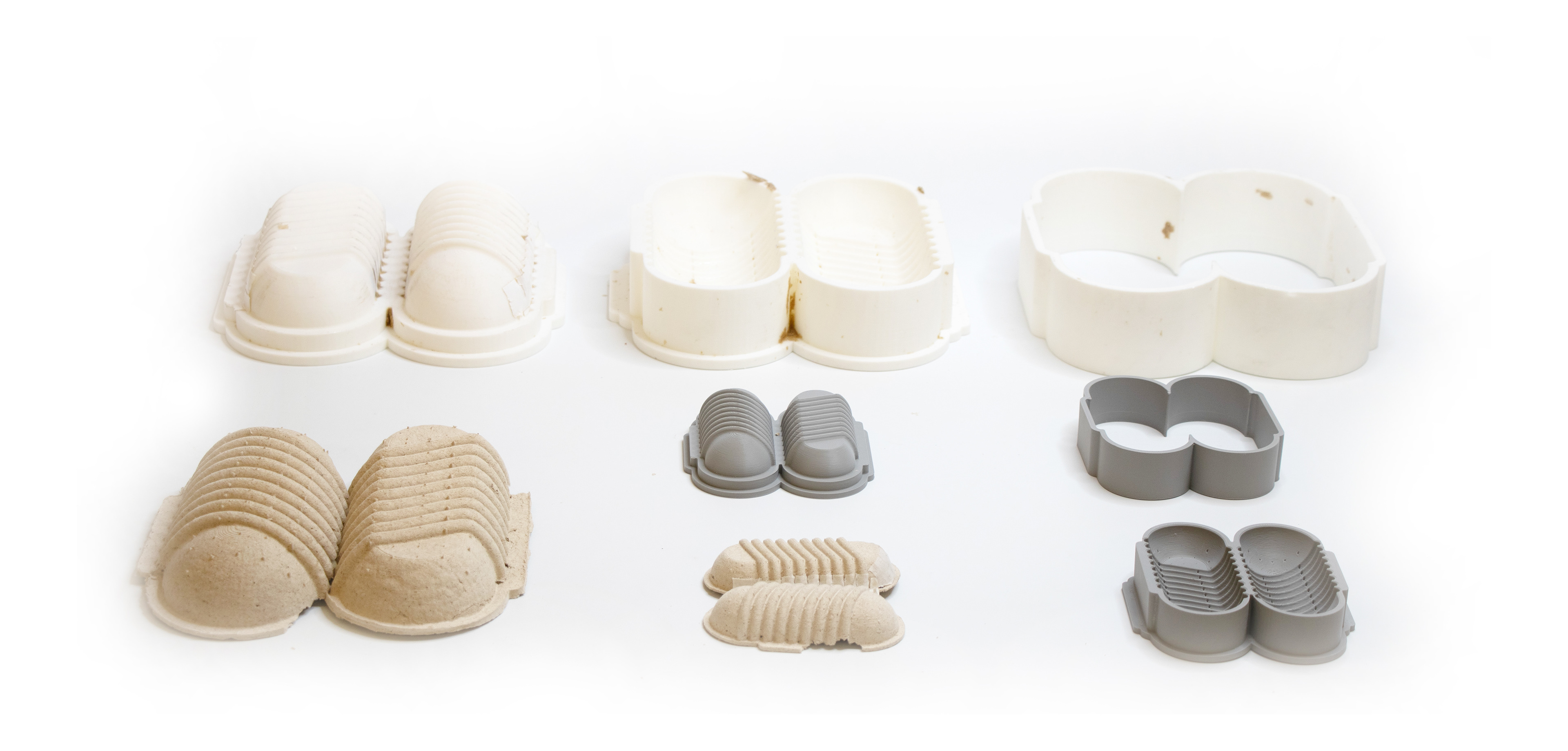
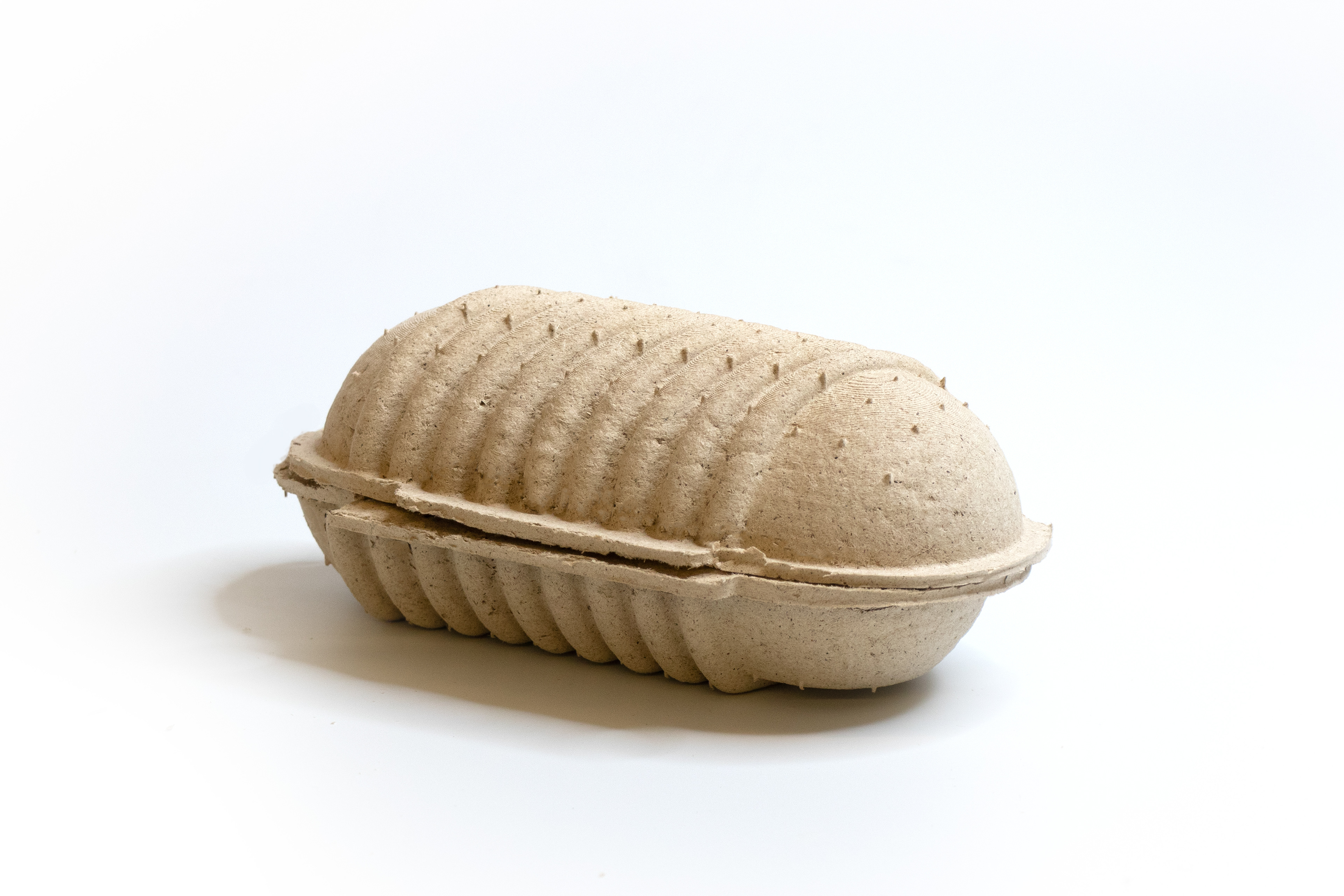
Seed Shell was created with a 3-part 3D printed mold consisting of a wall, positive, and negative piece. The packaging is made from willow pulp, bound together by rice paste, a biodegradable binding element, and vegetable seeds.
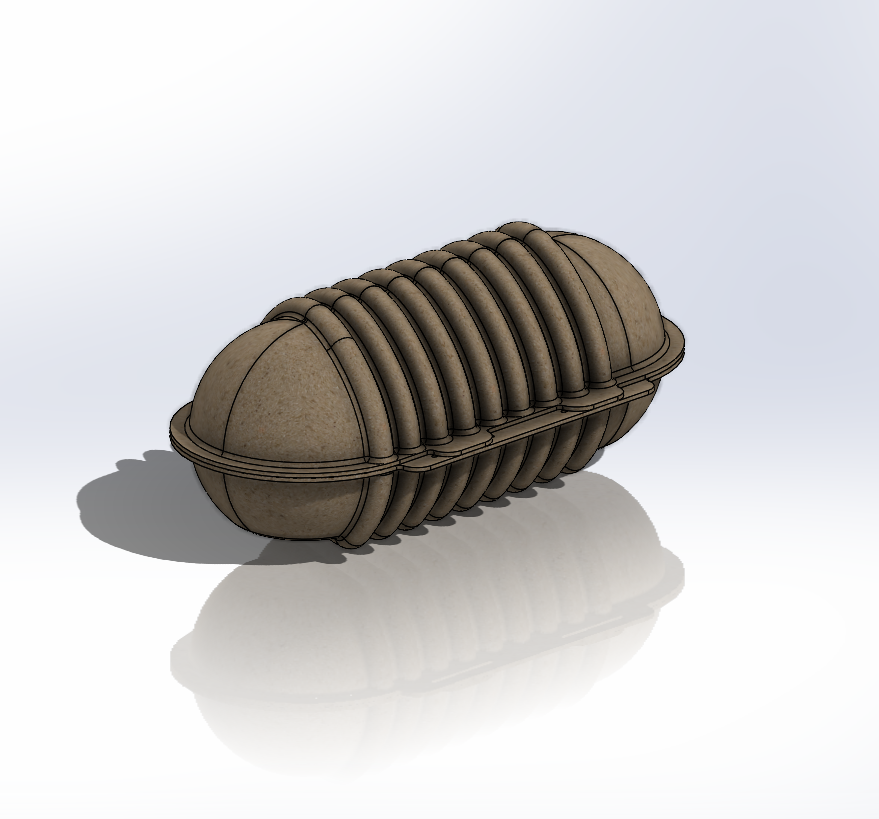
Seed Shell 3D Model
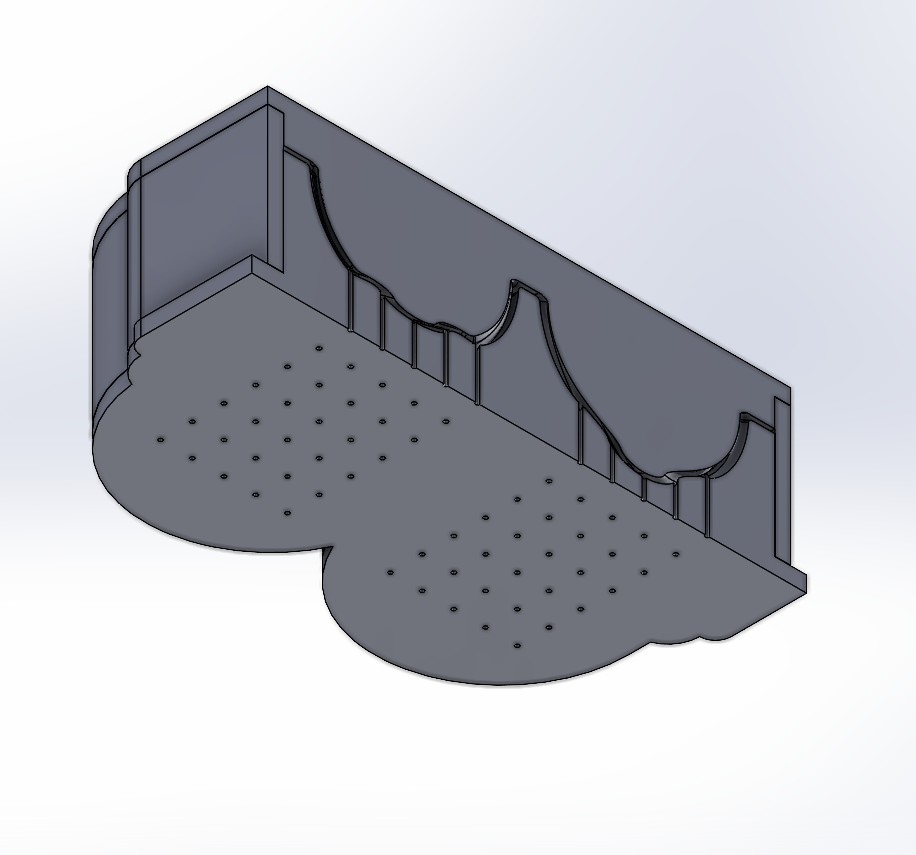
Seed Shell Mold 3d Model Sliced View
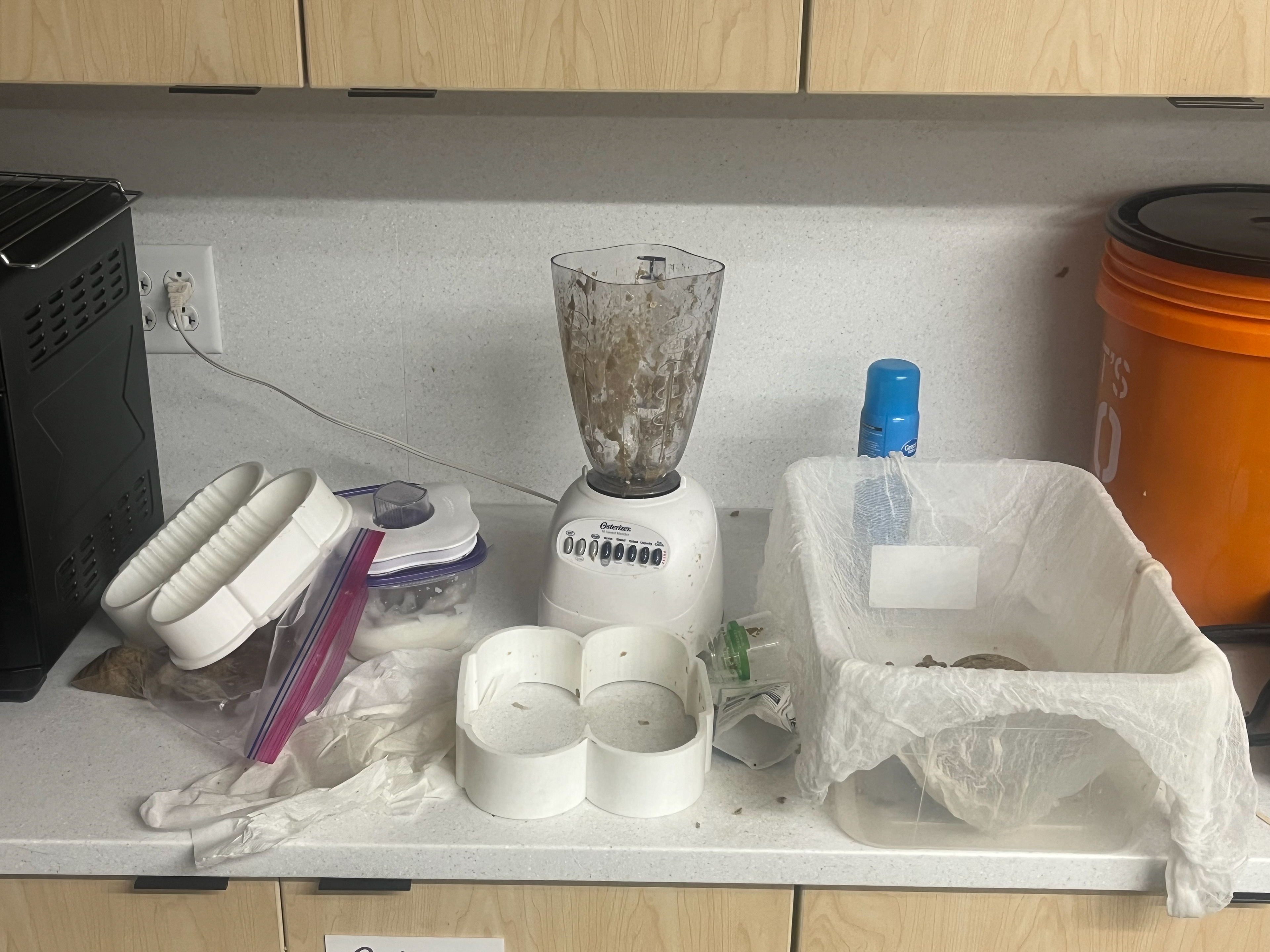
Sample Production